VE Day 1945 - A Historic Celebration
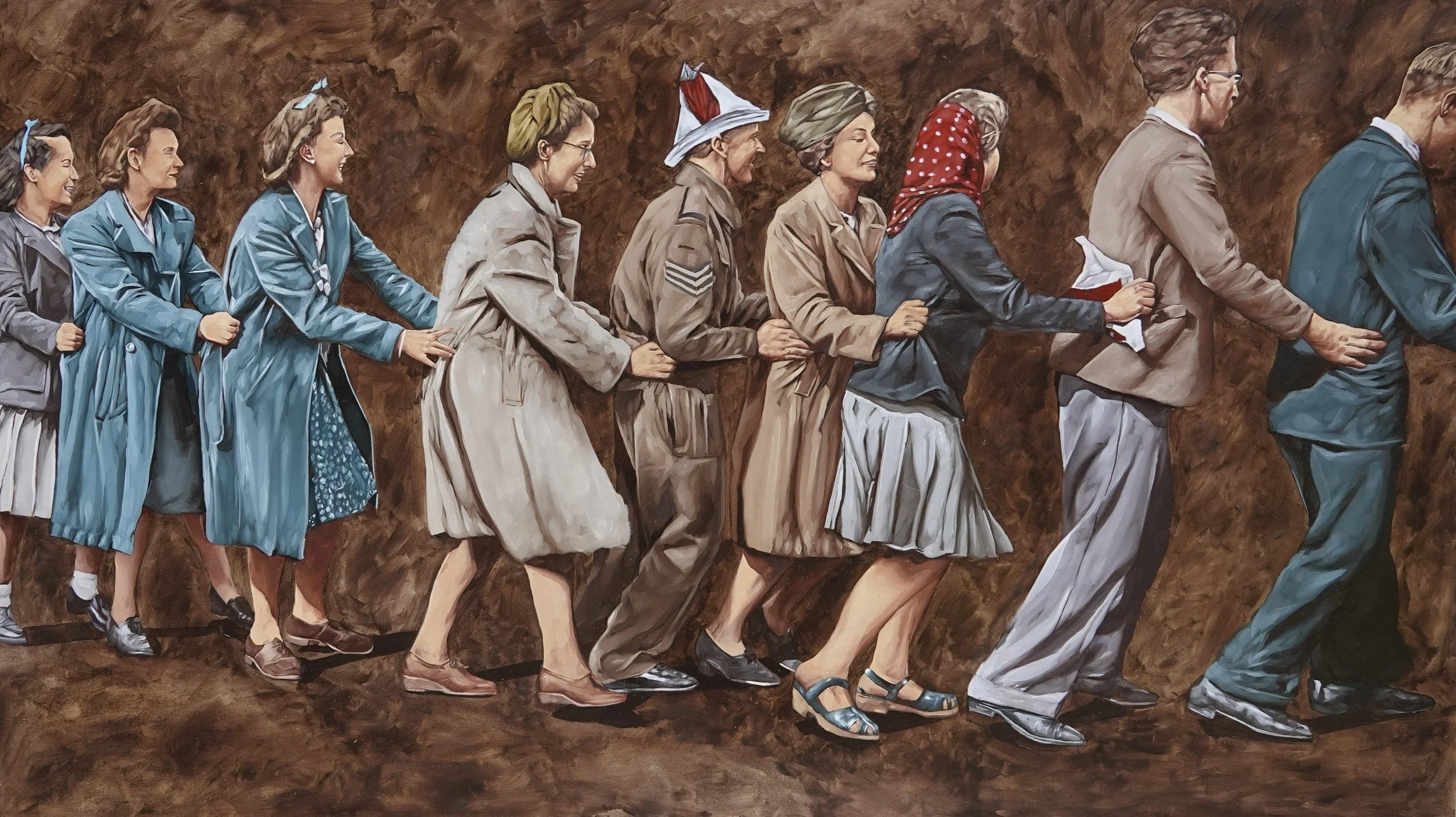
This painting captures one of the most joyous moments of the 20th century—Victory in Europe Day, or VE Day, May 8th, 1945. Depicting people in a lively conga line, it reflects the overwhelming relief, unity, and unrestrained celebration that erupted across the world as the Second World War in Europe finally came to an end.
The Historic Moment of VE Day
World War II had raged for six long years, claiming millions of lives and reshaping nations. When news broke that Germany had surrendered to the Allied forces, crowds poured into the streets from London to New York, Paris to Sydney. VE Day marked not just military victory but the dawn of peace after years of fear, rationing, and loss.
In Britain, Prime Minister Winston Churchill addressed the nation, declaring the war in Europe over. That night, London lit up with bonfires, music, and dancing. Ordinary citizens, soldiers, and families came together in celebration. The conga line, a spontaneous and joyous dance, became one of the lasting symbols of this shared relief and unity.
Capturing the Spirit of Joy in Art
This painting immortalises that iconic atmosphere. The flowing movement of the conga line embodies freedom, resilience, and the collective joy of people who had endured hardship together. It is not only a work of art but also a historic snapshot, reminding us of the unbreakable human spirit in the face of turmoil.
Through vibrant brushwork and expressive figures, the piece bridges the past and present—inviting viewers to step into that moment of laughter, dance, and victory.
Why VE Day Still Matters
VE Day is more than a date in history books. It serves as a powerful reminder of sacrifice, resilience, and the importance of peace. By remembering the jubilation of 1945, we also honour those who served, those who sacrificed, and the generations who rebuilt a world scarred by war.
This artwork stands as both a celebration and a reflection—capturing the triumph of unity and the profound relief of war’s end.
